

Still Sweet On It
Tools That Continue to Delight Daily
Here’s a new periodic column where I again profress my love for a tool I recommended in a previous newsletter.
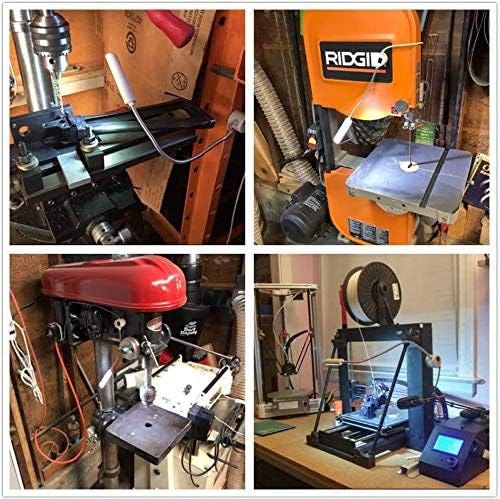
I wrote about Sewing Machine Lights in issue #208. These cheap, corded, gooseneck lights on a magnetic base use 36 bright LEDs to give you extra illumination on or near a tool or workbench. They come with six adhesive metal disks that you can mount around the shop so the light can be moved to where you need it. There are battery/rechargeable versions, but they’re more expensive and obviously need regular charging. You can get a 3-pack of the corded lights for $18.
3D-Printer Thread Checker
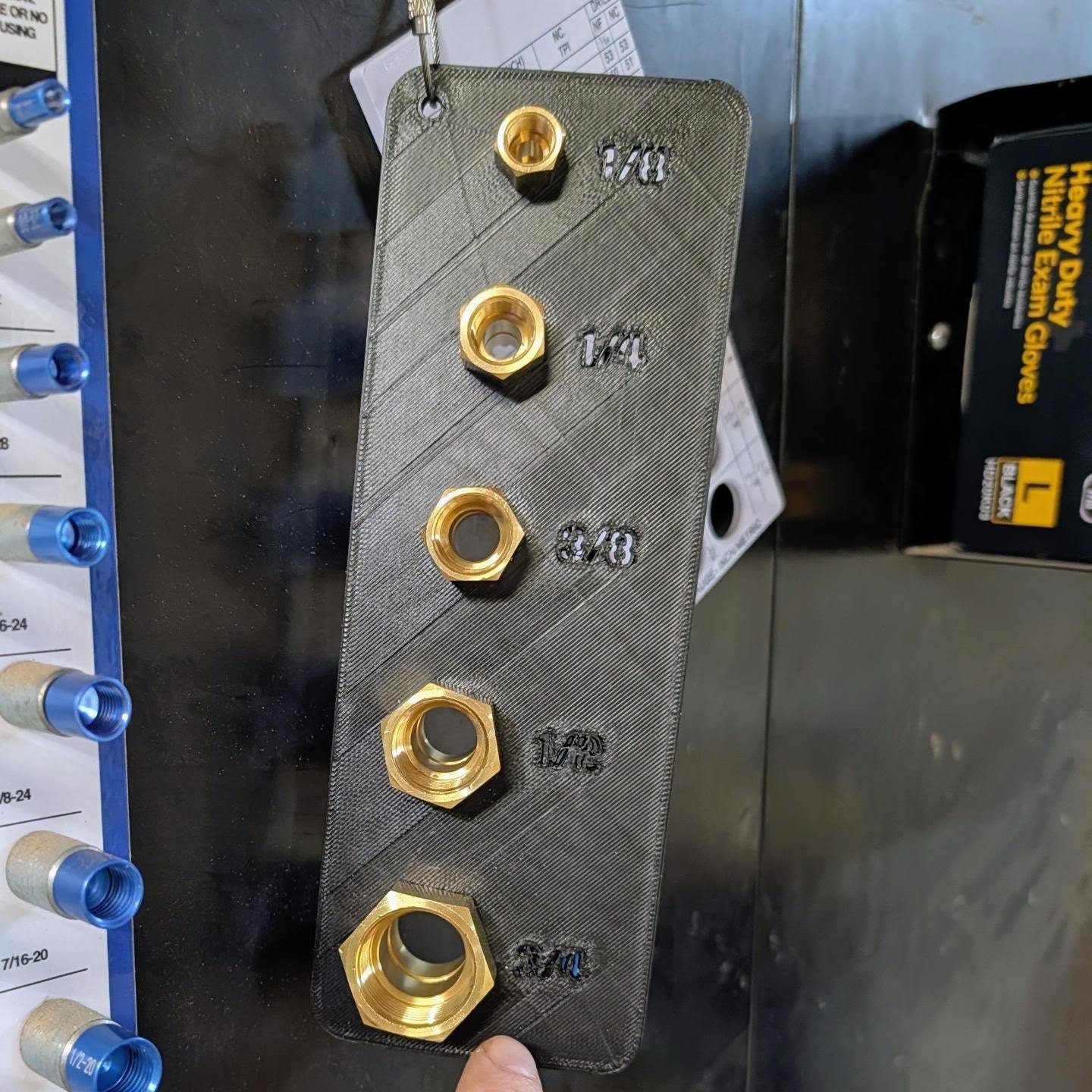
My friend and former work colleague, Sean Ragan, shared this 3D print on Facebook recently, saying “This NPT thread checker…may be the most useful thing I’ve made this year.” Sean has long been a thread-checker enthusiast. Here he is extolling the virtues of two commercial checkers six years ago on Cool Tools (a wall-mounted checker and one cable-wired model).
For the above 3D-printed checker, on its Thingiverse page, he writes:
This quick 5-minute print organizes 5 pairs of male-to-female NPT thread adapters in every standard size between 1/8” and 3/4”. If you’ve ever worked with this kind of pipe before, you know that the nominal size is only loosely related to the actual size and having a reference like this is a lot faster than breaking out the calipers, taking an OD measurement, and looking it up. You could also laser-cut it from any stock about 3/16” thick. To assemble, just pass the male end of each adapter through the corresponding opening on the front side of the plate, then tighten the female end onto the male threads from the back side.
The Accessible Workshop
Do you have favorite “adaptive tech” that you use in your work and home life? I’d love to hear about it.
Shop Vac Handle
For a healthy wrist, to bend at, say a 30-degree angle to hold a vacuum hose or other tool is not a problem. For a person like myself with arthritis, it’s a literal pain. Woodworker Glenn Frazee put this handle together with scraps from the shop. Not the prettiest solution, but it looks like it gets the job done.
Soda/Beer Can Handle
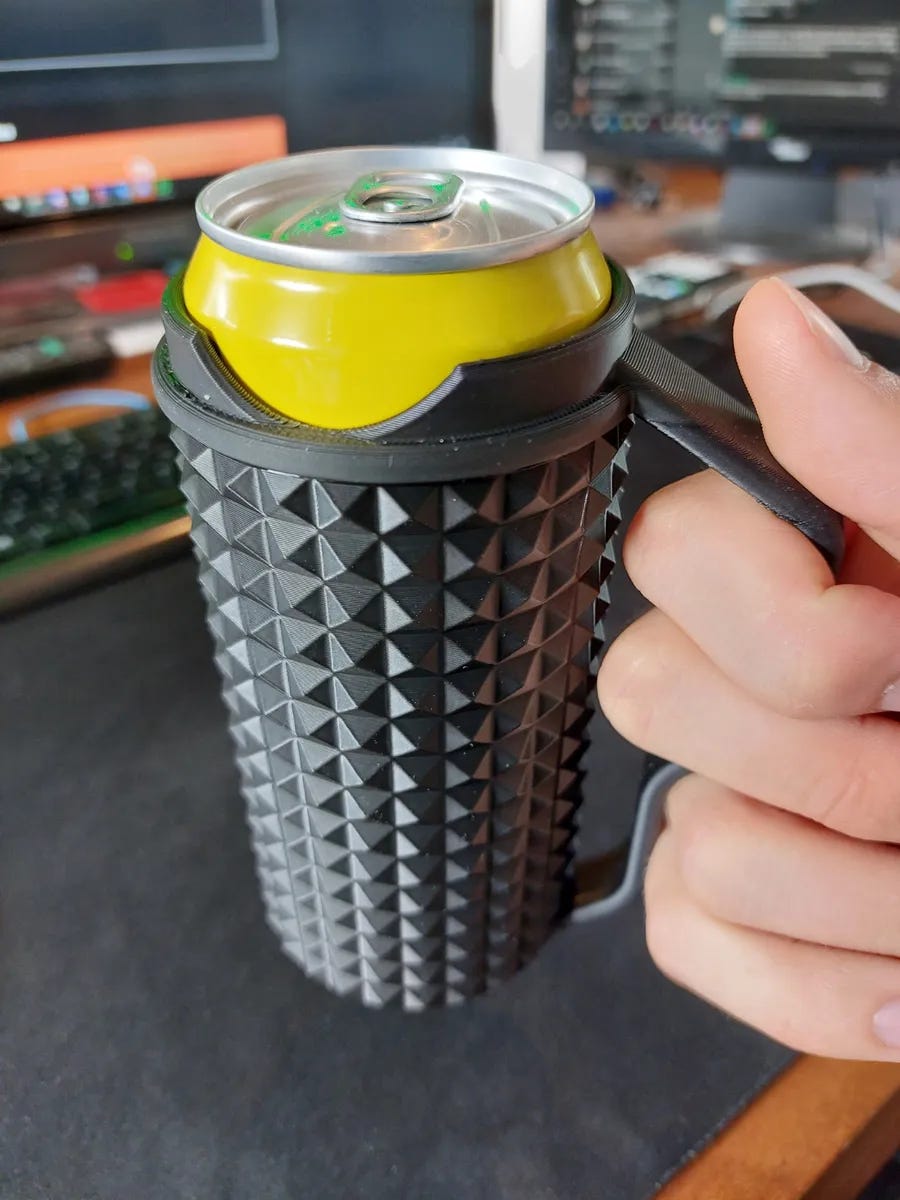
When I was a kid, my dad went through a phase where he fancied himself an inventor. One of the things he tried to patent was a clip-on soda/beer can handle. It was really cool to watch him sketch out and then create technical drawings (he was a civil engineer), prototype different handle designs, and draw up the patent. At 10, or whatever age I was, this was a great early maker lesson in just doing it (and the value in having developed the skill-sets to do it). This 3D printed ergonomic handle reminded me of dear ol’ dad’s design.
Tools I’d Pay More For
Small tools often come with big compromises. They can be awkward to hold, flimsy, or simply don’t work very well. In this video from the American Electrician, Sparky looks at a collection of genuinely professional-grade mini tools that prove compact doesn’t have to mean cheap.
The clear standout is the PB Swiss Pocket Driver. Sparky admits he thought these palm-sized drivers were gimmicks until he tried one. With a smooth rotating bit carousel, powerful magnet, standard 1/4-inch bits, and impeccable Swiss fit n’ finish, it’s become one of his favorite compact drivers. He’s equally enthused over Milwaukee’s tiny 5-inch pliers wrench, which packs surprising capability into a pocket-sized tool. He also praises Knipex‘s TwinGrip and miniature Cobra pliers, which he considers the gold standard for compact grippers.
Other favorites include Klein’s compact digital angle gauge, Makita’s clever compact socket sets, and Klein’s interchangeable flip-socket nut driver system, all of which save considerable space without sacrificing a lot functionality.
If you’re putting together an EDC toolkit, travel kit, or simply looking to lighten your tool bag load, there are several gems here worth knowing about.
Maker Update Update
I’ve been a devoted fan of Donald Bell’s Maker Update since the first episode. Every week, Donald or Tyler Wingarner (and periodic quest hosts) do something I deeply appreciate: they comb through the vast maker world, find some of the most interesting projects, clever tools, and unexpected, whimsical ideas, and package them into tight, entertaining roundups. It saves me hours of wandering down YouTube rabbit holes (when I don’t have time fo’ dat) while still making me feel connected to what’s happening across the maker world.
This most recent episode is especially strong. The first project features one of the coolest phone-based robots I’ve ever seen. It repurposes an old iPhone, using it as the robot’s brains. Download a $20 app, add some simple electronics and a handful of 3D-printed parts, and you’ve got a surprisingly capable little walking robot. I suspect many of us have an aging iPhone cast off in a drawer somewhere, waiting for a second life as a robot brain.
The next project heads in a decidedly different direction. A maker used recordings of his late grandfather’s voice, along with ChatGPT, to create a talking Big Mouth Billy Bass that lets him continue conversations with a sort of AI analog of gramps. On paper, it sounds like the setup for a Black Mirror episode. In practice, it’s unexpectedly moving, and it raises all sort of interesting questions.
Some will find it unsettling, even staright-up inappropriate. Others may see it as a new kind of memory object, one that preserves not just someone’s image or voice, but a little of the way they thought and spoke (see Rudy Rucker’s lifebox and soft death concepts in some of his writing, especially The Lifebox, the Seashell, and the Soul). Wherever you come down on it, it’s definitely a fascinating project.
Thanks to All My Subscribers!
I now have well over 10,000 subscribers to this humble little newsletter. And 50 paid subscribers. A million thanks to all of you. Doing this newsletters is a true joy for me and I especially like feeling like I’m connected to a community of fellow makers. Thanks to everyone who’s sent me an email, made a comment, shared a tip or tool. Let’s keep the ball rolling for another 200 issues!
If you want to financially support this work, please consider a paid subscription. It helps keep me in handsome, black Carhartt workshirts. I appreciate you.
A very special thanks to Hero of the Realm subscribers: Moses Hawk, Jim Coraci, Donobster, Peter Sugarman, and Will Phillips for your generous support.
We still have a gooseneck sewing machine light from one of our family's sewing factory operations up in the barn.
Gar: I’m a light user of this and paid to subscribe for two years to support you. I’m retired now and I want to stop paying after this year but cannot figure out how to. Can you please offer directions on this?