

The History of Heathkit
This is such an eye-opening mini-doc on the history of Heathkit and the role it played in post-WWII DIY/maker culture. I’m fascinating by that period in American history when all of these skilled G.I.s came home and turned their talents toward auto and motorcycle mechanics, aviation and aerospace, electrical and other engineering, Ham radio, and more. It was a remarkable moment when technical literacy, hands-on problem-solving, and the confidence to build and repair things yourself were woven into the fabric of everyday life. And the cost of owning your own tools and the space to use them became affordable to many.
In Heathkit’s case, they turned war surplus electronics components into kits with highly technical, clearly illustrated instructions that became home training for generations of hobby and professional electronics enthusiasts. I still remember, in the 1970s, as a teen, seeing a friend’s oscilloscope kit being built on his workbench and marveling at his methodical journey through the assembly instructions, checking off each step as he went. He was so freakin' proud of that thing when he finally finished it and it worked!
Are Expensive Work Gloves Worth It?
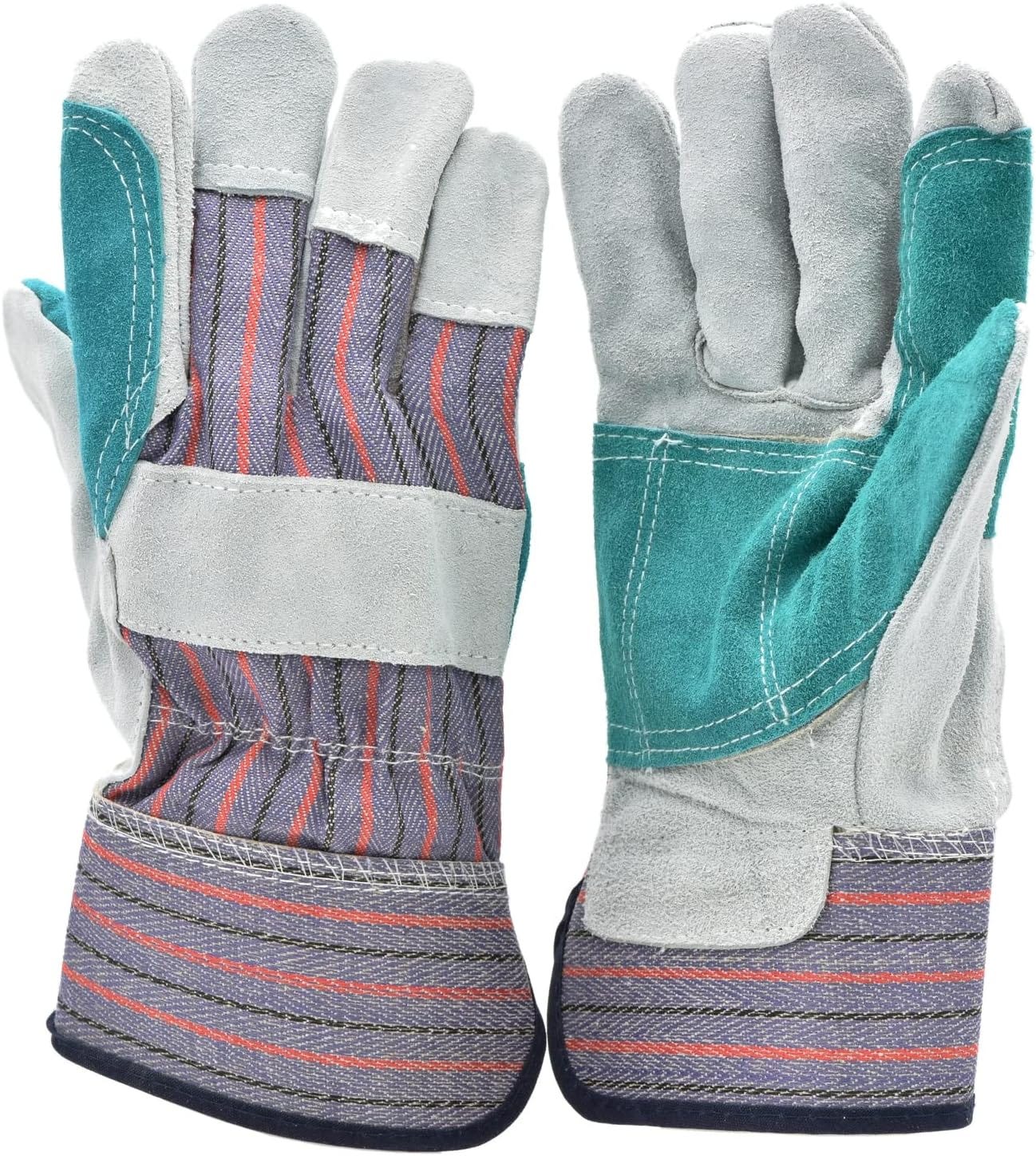
In this episode of Project Farm, Todd tests 17 different pairs of work gloves, ranging in price from $2.80 to $32. He tests them for comfort, thickness, force required to bend glove fingers, puncture and abrasion resistance (wear), impact protection, cut resistance, and grip. The results are surprising, and as he points out at the end, it’s always so rewarding when some of the cheaper options come out on top. In this case, the $2.80 G&F gloves got As in almost every testing category. But sadly, they got a C and D in comfort and bendability. The glove with the best price/performance sweet spot was the leather $10 WZQH glove. You can see the final results matrix here.
The Eureka Zone for Finding Lost Items

In Kevin Kelly’s Tools for Possibilities, in a piece about the book How to Find Lost Objects (available as a free e-book), Kevin shares his own object-finding strategy:
The majority of lost objects are right where you figure-once you take a moment to stop and figure.
Others, however, are in the immediate vicinity of that place. They have undergone a displacement-a shift in location that, although minor, has served to render them invisible.
Some examples:
A pencil has rolled beneath a typewriter.
A tool has been shoved to the rear of a drawer.
A book on a shelf has gotten lodged behind other books.
A folder has been misfiled, several folders away from where it belongs.
Objects are apt to wander. I have found, though, that they tend to travel no more than eighteen inches from their original location. To the circle described by this eighteen-inch radius I have given a name. I call it the Eureka Zone. With the aid of a ruler, determine the Eureka Zone of your lost object. Then explore it. Meticulously.
Making a Mint Tin Storage Cabinet
I just ran across this maker channel, Evan Monsma, and I’m digging the vibe. He had me at his mission statement: “I want to encourage everyone to build a shelf and change their own oil, that's all.” Subscribed!
In this video, Evan introduces his hardware system of color-coded mint tins for housing screws, nuts, bolts, washers, and misc. small parts. But his tins collections is getting out of hand so he decided to build storage shelving using a technique he’d never tried: dado joints. The way he talks through his planning and building process is very satisfying. And I enjoyed see him using a white Pentel Presto pen and drawing out the build directly onto his desk and the material. But I have to admit chuckling when I saw him drafting the dimension for the shelves on the shelf stock itself, thinking: “He’s about to cut those calculations up,” and then him admitting later on in the video that he had lost the dimensions in cutting out his parts. Oops.
I’ll Have a Shot of Drano, Please
Years ago, a plumber told me to never follow the directions on a bottle of Drano (where it suggests pouring as much as a half the bottle into your clog). “That’s marketing hype to get you to waste your money,” he told me. “Just use about a shot-glass worth at a time. Then a kettle of boiling water. And repeat as needed until the drain clears.”
I’ve been doing it that way ever since. A small amount of drain cleaner. Wait 20 minutes. Then pour of a kettle of hot water. Repeat. In my experience, it has worked most every time on the usual suspects: bathroom hair, sink sludge, and kitchen grease slowdown.
The logic, as he explained it, is simple. Most clogs aren’t epic blockages. They’re small, localized buildups. You don’t need half a bottle of caustic chemicals sitting in your drain trap. A small dose often begins the breakdown. The hot water helps move things along. Less chemical, less waste.
But there are caveats. Most chemical drain cleaners are highly caustic. Even in small doses, repeated use can stress older metal pipes. Boiling water and PVC don’t get along well, either. Extremely hot water can soften PVC joints over time.
There’s also the bigger truth: mechanical solutions are usually better. A simple drain snake will often solve what chemicals only nibble away at. And enzymatic cleaners, while slower, are gentler on pipes.
Still, for minor clogs, the shot-glass method has been a reliable trick in my house.
The Right Tool for the Job
Relatable.

[From New Yorker cartoonist, Emily Bernstein.]
Thanks to All My Subscribers!
I now have well over 10,000 subscribers to this humble little newsletter. And I hover around paid subscribers. A million thanks to all of you. Doing this newsletters is a true joy for me and I especially like feeling like I’m connected to a community of fellow makers. Thanks to everyone who’s sent me an email, made a comment, shared a tip or tool with me. Let’s keep the ball rolling for another 200 issues!
If you want to financially support this work, please consider a paid subscription. It helps keep me in Carhartt work socks. My feet appreciate you.
A very special thanks to Hero of the Realm subscribers: Moses Hawk, Jim Coraci, Donobster, Peter Sugarman, and Will Phillips for your generous support.
There is nothing more satisfying than finding a use for something that you have saved in a box for years; I have started to clear out my accumulated messes, and it is genuinely hard to toss some of these things. I've started trying to use them as a starting point for projects.
Also, I have a very clear memory of my father building a heathkit stereo (and yes Kentkb - vacuum tubes were involved). I must have been about 7 so this is going waaay back. Thanks for the memories
I completely concur with the drain cleaners by personal experience. I'd pour half the container down. As soon as it broke through, there it all went, down the drain. Sometimes it wouldn't break through at all. So I got a drain snake and never went back. Kept the drains clearer over time than the chemicals did.